Chineese Bloggers' Conference 2005 in Shanghai, China


CBC 2005: Closing Remarks

0 comments

Now they're going to have closing remarks and there's music being played. The organizers are setting something up.


It's a slideshow w/ photos from this conference. Nice pix:


Zheng of cnblog wants to thank all the volunteers who made this meeting possible. Tick of tickwang.com -he also introduces his group charity blog, ocef.com and zhangxi who's blogbus employee.


Yuan Zi: she has had a personal blog for a long time but never thought of the larger media implications


Wang Peng: he has a blog but its mainly links and is a member of cnblog
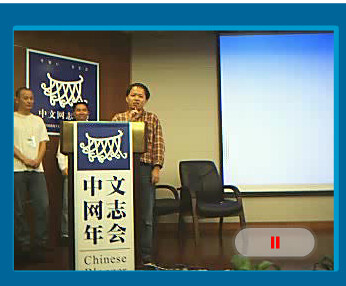


Xiaolong: has been online for 5 years but just about a year blogging
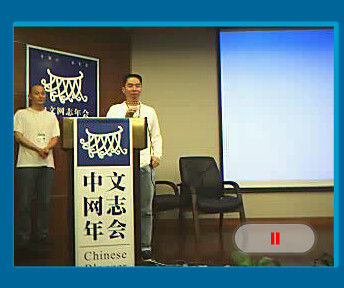


Chen xuer:
has been in the blogosphere just about half year. He came to blogosphere because he wanted to hear the truth and speak the truth wants to do something real.
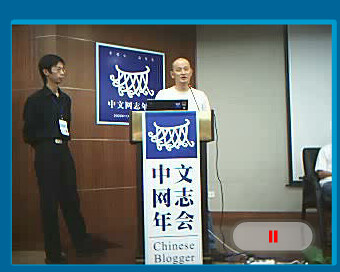


Isaac Mao comes out with Zheng:
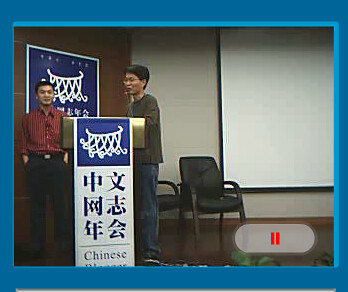


On the evening of the 4th we had no idea what would happen the next morning, didnt know if somehting would happen to cause it to be cancelled at last minute. Some people started coming even earlier than 8am. As soon as the meeting got going we knew it wasnt wasted effort. For the past two years we've been wanting to have a chinese blogger meeting. Now weve finally done it. Its a great accomplishment of the cnblog team thanks to friends from Taiwan and Hong Kong and overseas. We were going to call it the "china" blog conference but changed to "chinese" (implying language) blog conference to broaden the spectrum. It's called "annual meeting" which means that we need to do it next year. So where will we have this next year? beijing? taipei? guangzhou?


(Allen getting ready to go home....)


This is a great example of how you can go from online organization to offline. Hoping to have the next blogger meeting in beijing next year and hope it will be even better. That's all folks!! take your trash out with you!! Thank you :-)


Tagged: cnbloggercon


They have a t-shirt signed by lots of speakers and participants and they're going to auction it on the web and proceeds will go to blog-driven charities.
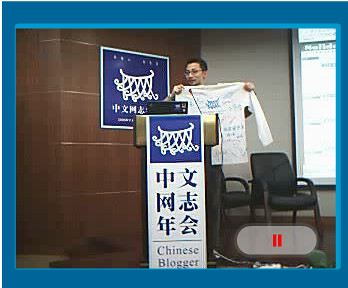


They're going to auction it off through the bbcc tag (http://technorati.com/tag/bbcc) which is the auction tag that will be used.


Tagged: cnbloggercon


Final Session: Selected Bloggers

1 comments

Zola is talking now, he is going to read his personal ad on how to change the world:

He wanted to change the world, realized he's too small, reducing the scale to changing the country, thats also not realistic but must start with changing oneself.


His site is: http://www.zuola.com


He is talking about how his blog is his personal plat form for his own ideas, talking about the friends he has met on the web. He's showing his own beach photo & the girls are hooting


Zola says his traffic has been fairly high lately but he doesnt want to be like furong jiejie or muzimei. He invites us to go to his website and get in touch with him. zuola says to be a person to document your life helps us to understand our lives.

Showing photos of people he met in xinjiang, a uighur woman he met who took him to a mosque, cool photo of himself and picture of some uighur kids he hung out with in yili in xinjiang.


Philewar - the creator of China version of Slashdot comes up on stage to give a demostration of his creation:


This is the guy who does the chinese slashdot: http://solidot.org/
He changed the name to solidot.org

There's question about what it (solidot) means: they (solidot site admins )said they were going to post something explaining that but its a combination word where "solidus" means "slash". Philewar created the site with Cathyan.


There's some comment made on the site aobut how the people keep growign beards. (Philewar has beard). Apparently the site said that these IT people w/ beards look like pirates, so he's joking that the site is accusing him or issaac of looking like a pirate.


Tagged: cnbloggercon


Jack is here to discuss tagging with other panelists of the session "tags/Folksonomy:


Jack introduces panelists as xx, zhangyang, chenxuer, zhaozhan, liu pingyang
& #6 & each panelist given an intro to themselves.


Liu is doing a chinese version of flickr


Jack is asking the audience what tag people would give him: like "skinny", "blogger"?
He asks who would think of "handsome?" everybody laughs...
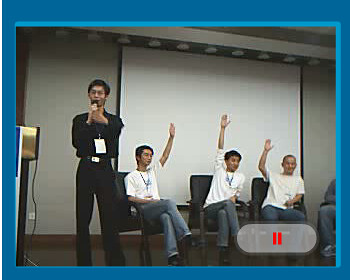


So jack is explaining how tags work as a way that people add their perspective and definition to a thing or person. Asking the panel to talk about when they first became interested in tags:

-liu (#6) says he first became aware of tagging in april 2005 and came to see how useful tags are. They're a kind of network, a method, and a model.
-#5 says the use of tags has a few key points:
-its related to information

microphone having problems - make it really really hard to understand
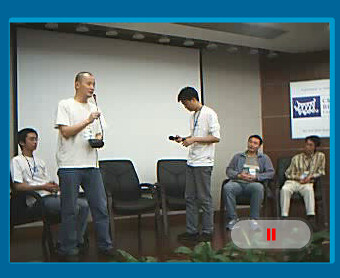


-chen xuer: why are tags so imporatnt? he thinks they're a really fabulous way to organize and share info. Talks about how people have been tagging (labelling) things throughout history. Tagging is the interface between computer and person when it comes to organizing and finding information. Its like a very low tech tool - the nail. If you went to remember something you nail it to the wall. Thinking a lot about tags. Talking about the cnbloggercon tag. how we are all connected through microcontent.

-zhang yang talking now"
"microfunction" - his new term
Its the way you connect microcontent together, he hopes that people can use things like tags to connect bits of microcontent together.

Now talking about socialnetworks: we now have a lot of new technologies like rss, tagging and so forth, talking about question of how people use information, whether people get too assailed with information. Thinks somebody should do a chinese version of technorati. Talking about how he tags things and about ebay and how he would tag news about ebay.

-Liu says his service is meant to help people use tags better.


Questions & Answers Session:


People have to go to podium because hand mikes are not working.
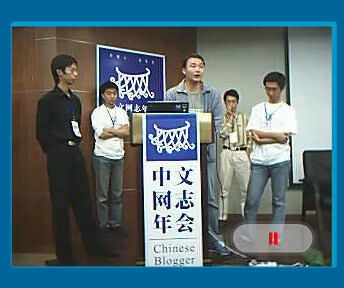


Guy is talking about the mobile phone search service, now tagging makes it even easier to find things. Talking about the difference between categories and tags.

Reason why tags emerged: computers have no feelings. Tags reflect people's personalities, experiences, and relationsihps. Quoting josh schachter of del.icio.us: on "how tags are useful". Because its useful for him to find stuff he wants to remember - so its also usefu for others. But the most important thing is that tags help us add our emotions and experiences and relationships to a piece of content. If all 1.3 billion people tag jack 90% will use certain common tags. Tags are free.

People have their own personal impression of things but we all share certain perceptions.

Debate continues.:
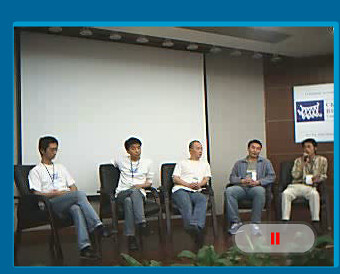


-Zhao Yang thinks that free use of tags will create chaos, he believes that tagging needs to be professionalized. Tag may be chaotic but no more chaotic than keywords. Seehaha videoblogger gives views on tags. When he burns cd's he has to give each of them a label. Categories and tags are not contradictory. Tags help you find things better.


Final comment: tags may seem really chaotic and crazy but out of the chaos comes the diversity of this universem tag gives humanity to information.


-chen xuer: tags bring humanity to the web. people can use tags to help make it more human everyday.


Hopes people will tag all of their information, so it can be better shared and found. Maybe there will be a better thing than tags eventually but they are useful now. Hopes the chinese can create an open api for tagging.


Tagged: cnbloggercon


Horse on Blogging & Public Relations

0 comments

Horse is back & talking about www.postshow.net


Now talking about blogbeta.com
About blog pr and blog marketing.
Horse is talking about the importance of group blogs

Blogbeta.com is aggregating and following a whole bunch of news from overseas and translating


He talks about the group english blog http://web2.blogbeta.com/
Introducing latest developments on web2.0 in china and putting it in english.

Now talking about ofblog http://ofblog.com/wzp/ by Wang Zhenghong.
Its a news blog and has become very active.


Tagged: cnbloggercon


Presentation by the CEO of Blogbus.com

0 comments

Hennge - he's the CEO of Blogbus
http://hengge.blogbus.com - is his blog


Hengge says he' been waiting a long time to finally have a chinese language blog conference. The reason why it has taken so long are the growth of many chinese blog service providers has taken a while. It took a while to get enough support and recognition in order to do a public meeting like this. People have pointed out that his name used to be douyi, not hengge
His real name is Dou Yi. He says that his name comes from a poem. Hengge says it doesnt matter whether a blog is chinese english or whatever, it is a very convenient communication tool.


He's really happy about this meeting: last night was talking with the editor of "computer weekly", both agreed it was successful. Theres a reason for this. we're all bloggers. Yesterday kevin wen was talking about how blogdriver was created. Now one of them works for bokee the other works fo rwiki, they didnt mention bokee in their speech. kevin didnt advertise the fact that he now works for bokee - fact that he focused on blogdriver and didnt advertise bokee was important well Bokee and Blogbus was rivalry in Blog hosting.


Now talking about a photographer's perspective when it comes to how you set up a photography exhibit - you cant put too many random things in it. Who is china's most famous blogger? muzimei. why is she not here?

He's going to a comment somebody left on his blog:


Somebody left him a comment about whether "wangzhi" is correct translation of "blog" and "blogger". Hengge says hopes that people will give suggestions for better conference next year. He says a reporter asked him why the content of his blog has changed. He's been trying to keep his blog as a personal space but people still associate his personal blog with his company. He emphasizes he's here today representing himself, not blogbus CEO, but wants to emphasize something about blog service providers in china, at this point he hasnt seen a really good chinese blogging platform. A lot of the people here have set up their own sites, no chinese blog hosting company is able to really satisfy chinese users needs. This is a problem - people are asking about the competition between different blog service providers but he thinks the competition isnt w/ other different companies but its more a challenge to our internal teams. We are likely all to be developing in different directions. He hopes that every year we can have a blogger meeting like this from now on & hope that can give better service to bloggers.


We always say blog is personal media. Once youve been writing it for a long time it becomes your personal capital. Like isaac said, "our brains are plugged into our computers". He's hoping he'll be able to continue blogging his personal blog and leave his personal legacy on the web.


Tagged: cnbloggercon


Presentation VI, "Blogging and Media" by SayOnly (Zhi Shuo)

0 comments

Sayonly has started talking about the relationship between blogs and media:


He will talk about webzine, xplus, and blogs, different kinds of online media and about perceptions in china about blogs. Poll results and talks w/ IT experts in china, he will also show how people in china view blogs.


Its pretty early to talk about blogs as media in china right now is what some people say because people say they're still very amateur. First takes a look at how the media reports on blogs. He talks about recent businessweek article on blogs and about the point of that article.
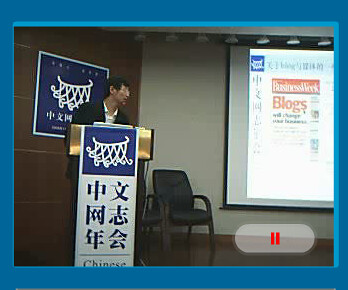


Now he's showing boingboing, digforfire - which is a webzine on music in chinese, xplus - a chinese website started in 2003. Its a desktop client to subscribe to online magazines.


Next slide: webzines
Shows examples of a couple u.s. ones: the revealer and "the raw story" while talking in depth about the history of webzines in the u.s. He's introducing them to the chinese audience and is talking about editorial structure of webzines.
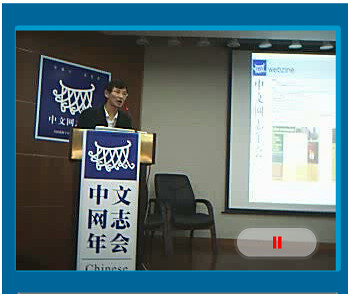


He's now talking about the chinese webzine subscription platform xplus & explaining how it works. Continues to explain in some detail how xplus works - its a desktop client that enables you to subscribe to webzines and now moving on to some blog related ventures - AlwaysOn. He's talking about opsn-source media and insider network with always on, there is a super-blog, with lots of people blogging within it, but while each has an rss feed subscribers not big.
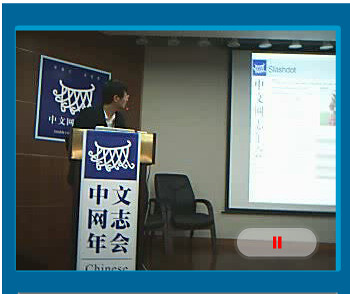


Now SayOnly talks about slashdot and the founder and the history of how slashdot came to work.
Explaining how slashdot's community site works in great detail. When it was small, how the spam could be managed by hand but as it grew things had to get more mediated by a group,then eventually thing had to be automated.
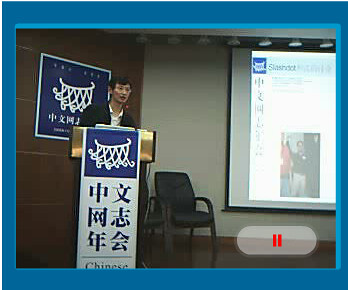


Talks about how it started in 1998 with first post, then grew in 6 months to an explosively large site. He is still explaining the community reputation system within slashdot which determines how prominently your post is featured. Talking about the democratic model of media which slashdot presents, and how its a good model for chinese sites. more about slashdots' (success).
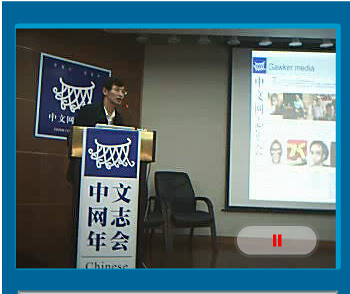


Now SayOnly is talking about gawker media:
He's introducing the various authors of the blogs within gawker media, like wonkette's ana marie cox, gizmodo's joel johnson, jalopnik, fleshbot, defamer, screenhead, lifehacker, etc. He's talking about each gawker media author one by one in great detail.
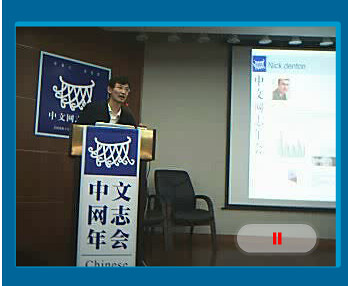


Now talking about Nick Denton who's the founder of Gawker Media. Talking about the spat between nick denton and dave winer - about rss, etc.


SayOnly is now doing the summary
:


-lessons: all of these successful online media have a strong capable leader behind them
-Successful blog media have a really all star author team

Now he's showing results of a poll about blogs

http://static.flickr.com/29/60307205_6a384cedee.jpg">


Now looking at results of impact on blogs:

-75% said blog can be media
-16.2 think that blog isnt media ... etc...
-86% thought that blogs commercial potential still not ripe

Talking about his discussions about blogs w/ 2 different bloggers:
-fangjun of ideastalk.com
-michael anti believes that blogs can fill in gaps that media doesnt fill
-mushiyuliang "priestliu":

He thinks govt should have more open view towards blogs in china
-laoyao: another blogger, thinks blogs can give us windows into peoples lives better than other media
-lilao, another blogger (too fast, didnt catch)
-anke, reporter - is creating a search tool

he believes that blogs can supplement other media


-webleon another blogger.. (didnt' catch, hes going really fast and mumbling now)
-wozy: has a very complicated view about blogs and their impact

Sayonly says that 2006 will be a very important year for blogs in china


[UPDATE: Rebecca just created a bloglines aggregator with as many participant blogs as she knows of here: http://www.bloglines.com/public/CNBloggercon
If you know others she's missing, please email her on rebecca.mackinnon(at)gmail.com]


Tagged: cnbloggercon


Tagged: cnbloggercon


Mak presents his blog: mak's man&machine interface
http://makzhou.blogbus.com


He says he went from being amateur to "pro-am" and hopes to become a professional, he used to just blog about himself but after 2000 august he started to meet more bloggers and came to develop a sense of social responsiblity. He gained this sense of social responsibility through writing his blog and he visited a lot of schools in the western part of china.

He shows some photos he took.

Mak's blog is not only citizen jounalism, but he educates others, educates himself, and is also sociologist.

Here are the pictures he showed: http://www.flickr.com/photos/makzhou/sets/918243/


The next blogger is cnblog:
blog.cnblog.org


www.creativecommons.cn
wikipedia.cnblog.org

He shows the stats for cnblog:
- An aerage 2-3 thousand visitors per day
- they have much bigger traffic thru rss feeds
- showing referrers
- google and baidu searches make up 30%
- google talk and furong jiejie are the hottest terms


The lessons of doing open source communities in china:
-its definitely a challenge
-people dont always accept your ideas but he hopes more people start such open source communities

He is showing stats now from wikipedia mirror site:
-most visitors coming through baidu
-shows search terms
-all of these stats are public
now showing stats for creative commons china


Tagged: cnbloggercon


Conference Stops for Lunch!

0 comments

Participants & organizers of CBC 2005 on day 2 going off for lunch:


Blogger Zola, rushing off for a bite before the next speaker session starts:


And, speaking of Zola, he's got some nice photos from yesterday's CBC 2005 conference at his weblog!


And the stage & podium is set for the next series of presentations after lunch:


Tagged: cnbloggercon


Showcase: Selected Bloggers

0 comments


As the conference is running late, organizers have decided that the second break will be skipped and we're going to the next blogger presentation.


smilinglibrary.blogbus.com

This is a NGO blog aimed at collecting old books for kids in poor areas. Its a non-profit organization around a blog. 1370 kg of books (for the kids).


They started by using blogbus and people started promoting the project on their blogs. Then others started linking to it.


So then a bunch of volunteers set up on blogbus and helped promote the smilinglibrary.


Next blogger/project is 1kg:

www.1kg.cn

An zhu is presenting:


This project collects information from ngos about poor schools and then puts out info so that people gan give books and other things to those schools. There is a question of corrupt school officials and whether they have adequate monitoring.


The thing is this project is based on trust. So they increasingly have face-to-face activities with the schools. Travelers are asked to take an extra kg of schoolbooks and materials when they go to an area to give to the designated needy shcools.


Tagged: cnbloggercon


Presentation V: "RSS" by Lu XinXin

0 comments

Adjusting his screen, Lu apologizes for lack of break, bcz he has an appointment
He wants to turn this talk into a social network and make it interactive with other people in the room. He would invite the featured bloggers


Lu Xinxin is now talking
He was the CEO from feedsky, this may be his first time talking about his views on rss in public


He asks if anybody in room doesnt know what rss is
Lu invites blogger xiao bai, bxy (claims he doesnt like to talk. right.)
He is showing a feedsky feed


Bxy is talking about how dave winer invented rss, he's a big fan of dave winer (scripting.com)
Dave winer created rss to give every single person a tool


Lu resumes talking
Shows slide of how people interact with microcontent via rss
the path from content creators becoming content receivers


Bxy talks about different www.hao123.com and 265.com:
Do you waste your time clicking through links looking for new content?
yes
but rss is much better because it only pushes you new content
so rss is much more useful than hao123.com
everybody here are creators of the web
the web is becoming a truly open web, thanks to xml

You dont have to gather all users or creaters in one place in order to see everything you want

Now he's talking about tags


-social media
-open platform
users self-organizing through tagging

Lu now talking about the rss structure and what its commercial model might be.

Tangos are talking about how lots of mainstream media are creating rss feeds of their content
-statistics of content
-ad in RSS feed
-rss advertisements


Lu xinxin says that outside the commercial model there are undoubtedly many more applications of rss that we haven't yet thought of.

Now he's talking aobut how rss will impact various professions
example: education

Teacher can set up students with ress readers then send out everything the students need from the lecture materials and so forth via rss feed.

He is asking zhuang xiuli to talk
She is talking about how she introduces rss to teachers in her own clas, every student has a class and she subscribes to rss feeds of all of them
RSS is a great way for teachers to get to know students better in big classes theres little opportunity for face to face interaction.
kids can hold class discussion on blogs, facilitated through rss


Lu xinxin now talking about use of rss within companies as way for people to keep on top of each others' info. Now talking about the future of rss. Lu invites famous blogger from guangxi. (kenlee.cn)


Ken is talking:
-he says blog is like island.
-it generates rss, like small tree saplings

So you need to search to find out what fruits you want to pick but that takes a lot of time. so a lot of tools help us create our own personal orchards from what we want
Then as we enjoy these fruits we will have new ideas and reactions, leading us to create new content which becomes new seedlings, and the cycle is repeated,so its an endless cycle of dissipation and aggregation


-(the tao of rss)
-(tao of the web..)


Lu xinxin says that identity is now determined by people's urls

now talking about rss and copyright issues
invites xba (http://blog.hexun.com/xba)


xba talking:
when youre putting out rss feeds you're not retaining all rights or pepole cant use your rss
theres a lot of debate about copyright and rss (talking about lawrence lessig)


talking about the creative commons license giving non-comercial attribution license
question of whether the license should be for attribution all rights reserved, or for atribution non-commercial
some people subscribing to rss cant see license
so they cant say they're violating copyright
so if you want people to know your license it needs to be written into each piece of content

atom format enables license to be written into each piece of content
flickr allows you to pick license
anyway this is a really really complex issue

Under current conditions: he suggests you might need to attach license to each piece of content if you're really concerned about usage of your content


Luxinxin says its not clear who first brought rss to china
-may have been zheng.
-would like zheng to write more on his blog about how that happened
-rss in china: seems to be in very early stage of development


He shows graphic from Feedsky
His company which is tracking chinese feeds
rss will develop very quickly in china just like in rest of the world


When he says he is doing site about feeds people ask him if hes' doing a food site
He invites herock to talk
http://www.herock.net/

Herock says: under current circumstances theres no commercial application for rss, A lot of people have rss feeds on their blogs and dont even know. Talks about sohu blogs, doesnt like them. People need to pay attention to details. Lu says he's worried that companies will mess up rss w/ commercial apps.


Lu's URL's:
www.lvxinxin.com
email: lvxinxin@yikey.com
msn: xasf2000@yahoo.com.cn


Business-related problems associated with web 2.0

The likelihood of which users need to pay for themselves

micro-payment is another important tool for web 2.0 development
-it provides a platform for spontaneous transactions


The Spirits of web 2.0
-To transform ourselves through adopting web 2.0 online
-also about the idea to share and to be open & to be original in blogging

What I'm going to talk next has more relevance to you.

What constitutes the web?
We believe that we are the pillars of the web. think of the case of blogging.
We have blog posts, pictures on delicious, to-dos on 43things, and reviews on Deouban
We use our own information to form the content, posting on our personal pages thus constituting different websites

1.microcontents, 2.personal pages, 3.websites
Leads to: Personal database center, personal portal -> we the web

Users have become important contributors to webcontents, reading list, blogroll and thus making them important and this is why we need to have more users-centered design

Social Relation:

Microcontents: blog, bookmarks, photos, todolists, podcasts

Social relations: individual, kin, friends, classmates, colleagues

How to we structure the vast amount of information of the microcontents?
tags and in particular RSS. Bookmarking is also one of the tool.
Distinction with BBS and the newly-emerged use of SNS Social Network (synthesis?)

Web 2.0 application in entertainment , human resources
We can see that the tools that manage microcontents can be put as tools for information/knowledge where as the way we form social network (group, SNS, community, IMs) belongs more to social network formation. Of course the distinction is not clear-cut . We would talk not just about information, but also the social implications embedded in it. For interpersonal relationship, internet would enlarge our definitions of social structures


Now i would proceed to the most interesting part of the talk
****semantic? Contextual web****

contextual web
Semantic web: contextual web

social relation intergrate into internet
Social relations have completely diffused into the internet sphere
Any person's post or link has complex semantic relationship.

we have enlarged semantic meanings for the contents online
we would know that there is a living person writing it, and we would know the social relations of this person would that be a PR passage trying to pretend that it's a neutral blog?

semantic structure
- 1, knowledge
- 2, personal relations

Reading habits: link-driven world. Mutual reinforcement and repetition the linking and semantic web are the main reason why newspapers are threatened, because our reading habits have been completely changed by the web of links example: talkdigger.com & also http://tech.memeorandum.com

questions: can the semantic web scale?
also: what is being recorded (saved)?
can look at the relationship between information/content and the time when it appeared, etc.

Horse shows a table showing different services and their usefulness for different kinds of searches
semantic? contextual web... far away...


he now wants to talk about his personal observations about the semantic web
things to watch in social behavior on the web, analyze user behavior

how people manifest their personal identity online
look at how people represent themselves online and how they create their identities
look at social relations online

many people ask about what will the social and political implications be of these changes?

horse thinks that it will be very subtle and slow, bubbling up from the bottom and hard to point at concrete changes initially
creativity, dialogue are key terms

things that are anti-web 2.0
unfair business practices

horse thinks that the government actions arent as threatening
he doesnt think that the law will prevent people from doing most things
more concerned about business practices: spam, copyright laws

the key to protecting web 2.0: let the individual become the "points of light" and protect them
his website http://zhanbin.com

Tagged: cnbloggercon, 中文网志年会, CBC2005


Chedong is talking about the nonprofit web activities and describes the cnblog experience:


- its hard to set up nonprofit organizations in china
- the legal structure isnt set up for it
- fund raising is also a big problem
- big problem for nonprofits to fundraise, especially on the web
- Chen Zhiwei runs a blog media company (kind of like gawker)

Chedong thanks Zhang Erning


Lao Mao is now taken over the mic and is sharing his experiences:


- He blogs at www.uuzone.ocm/blog/mao & moblogs at http://www2.uuzone.com/blog/mao
- He says that every blog is a person
- the links are "guanxi" - your connections with people
- trackback is communication
- so blogs are a huge social network
- future blogs will be very different that what we have today
- but the main thing is that they will create relationship links and web amongst people


Topku Chan has started delivering his session & now he apologizes bcause he's Cantonese, he says his mandarin isnt very good.

- hes talking about why companies should care about blogs
- as blogs develop in china society will be =come more and more individualistic so companies will need to diversify their p.r.
- the web is distributed so companies need to have dialogue with networks of users/consumers ets
- companies must communicate with people in their own language
- companies need to learn the art of linking
- they should see what their inbound links are saying about their products
- companies need to be smarter about using google search, tags, rss, links and etc.
- you should look for negative things that bloggers are saying about your product and use it as feedback for improvement, rather than try to control or stop the negative views


Topku talks about 2 points companies need to understand:

- the very nature of p.r. is changing
- keyvoice is bigger than "keyword"
- "keyvoice" is his own invention
- you need to pay attention to the key voices talking about your product


Kevin Wen is starting, introducing himeslf and welcoming foreign particvipants like Rebecca and Owen from feedster.


Kevin is now talking about the development of cnblog. Kevin says blog is another kind of document web - rss, xml and as a result pepole can connect to each other through links and rss feeds in ways not possible before. Hard to tell where the future is going , but we seem to be going in the direction of semantic web blogs: qblogs

skipped a couple of slides


He's talking about the "click" phenomenon

In the beginning you could only click on links within sites.
Then search helped us find things we were looking for ability to search information

"express intent. does not depend on result" (from slide)
stage 3: tag - we can label items to manage, remember, and share


How we start? (how his company started):
They started with a brainstorm session in small apartment.
And formed an organized team.
Felt that they should help more people do blogs
Their whole team met each other online.
They hadnt ever met in person and had various online meetings then figured out how they could develop a product to help users blog. Thats how they created blogdriver. It was a whole group with no marketing but developed 400 thousand users.

But some things that seem simple are much harder than you imagine
When youre working remotely with people how do you pay them?
Communication was always big challenge


We used a lot of im and skype and studied how u.s. startups work
Then went to south-by-southwest conference in austin in 2004 and had a chance to interact with other startups for the first time. We met six apart, feedster, etc. and learned how they work.

The biggest lesson: learn from users otherwise you cant develop a good service or product idea of a "personal portal".

In the brainstorms saw that there was demand in china. The startup was tough period: more efforts we put in, the more responsibility we have. After working for a year or so, had to make tough decisions, either find vc or merge with another company. It hit a point where they had to decide whether to merge or get round of vc capital. They realized they had no managerial and operational experience and the necessary connections, etc. So they decided not to seek next round of funding, and instead decided to merge with blogchina
(now bokee).


They felt it was a good platform, with lots of good management experience and Kevin feels that it was the right decision:
- lessons of entrepreneurship:
- learning by doing
- nobody is an expert
- professional amateur
- you must keep your mind open as you move forward
- this is much more effective than book learning before you start something

next lesson: focus.
know the value
you must specialize and be clear on what your differentation is

partners: you need good trusted partners focusing on one thing, do it very well and enjoy it a quote from david sifry

innovation: he is going to play a video of tiger woods
everything is possible, just do it
what innovation is not
just because you have new tech doesnt mean innovation
nor is just r&D
not just creative playroom
innovation is a process
its not just having an amazing idea


seed of innovation: understanding, imagination, action


Kevin is showing the "read my lips" remix video (the one with Tony Blair and George Bush mixed over "endless love"):


...Kevin finishes with his presentation .....


...and the Panelists are geting ready to start.....


Bxy Showcases Pirated CDs - Extension of Podcasting Session

0 comments

As the podcasting session draws to an end, Bxy brings out a whole bunch of pirated cd's talking about how they are all a kind of podcast. But there's no central authority through which you'll get your media content any more.


Session is now over and they're getting ready to go to next session but Bxy insists upon speaking more and he points out that if you buy a blank cd in the west, you pay tax but not sure if some of it goes to the copyright holders.


(particpants/speakers gather around to check out what exactly Bxy is up to :-D)


[In the IRC room I popped the question of what exactly the showcasing meant - what it signigied, to which Nick replied that it was regarding the tax part: When you buy a blank cd in europe for example, they think you actually buy it to copy music, or videos. So the music and video-industry get s a share of this tax as compensation]


(More interested people huddling round Bxy and his box of pirated CDs :-))


"hopesome" is moderating the session - on the mic at the moment:
Hopesome is introducing other podcasters: wang wei, ken, leo (Liu) and baixiaoyu


They're going to have an interactive discussion on podcasting which may not have any real outcome but hopes to cover issues of common concern.

Hopesome starts off with first question:
Podcasting is it a very new thing?

(guy #1) A guy comes up to podium, introduces himself as jack who is a former microsoft employee and does some stuff related to podcasting. He joins the panel.
He's doing a new podcasting site.

According to hopesome podcast is the next generation of broadcasting.

(guy #2): its a way for people to express their own voices
(guy #3): podcasting as extension of blogs, with the ability to do multimedia
(guy #4): technology advances give us the opportunity to express ourselves in new ways
(guy #5): easier to express through voice than through text
(guy #6): podcast is extension of blog

Hopesome asks how many people in the room are podcasters. about 10 raise their hands


He asks jack (#1) about the state of podcasting in china:
jack says theyre still in early stage here, in the states they've only been going for about a year. Theres probably 10-20 thousand chinese podcasters. Its not as intense as bloggers. Jack hopes they will eventually become a more habitual mode of expression.

Hopesome: itunes has caused podcasts to increase?
(#2) tudou replies: podcasting here is different than in the u.s. Many of the podcasts are just fun
but there are some interesting things, like one guy has been reading out each article of criminal law one by one into the podcasts.

(applause)

Using it as an educational tool.

Tudou gives some other examples of how people are using podcasts differently, recording conquests w/ girls, etc.


Hopesome continues asking questions, and asks bai xiaoyu what he thinks:


Bai Xiaoyu replies: everybody now has personal channel & its an issue of copyright.


At this point the podcasters are starting to argue about who has coppyright and who doesn't.


Its not like only pop stars and famous people have copyright
You have to respect people who do or don't want you to use their material
There isnt necessarily a direct relationship between podcast and music

Hopesome asks about fair use question:

bxy says: stop viewing yourself as a consumer. you are a creator
we cant think that only those authors and pop stars have copyright
the copyright laws aren't made to fit the current situation
they treat us all like consumers they dont anticipate that were all creators
but hes not encouraging people to pirate the popstars music he advocates ignoring it

question: how do you control your material
answer: political stuff pretty much all gets taken off
the porn is not hard to police
one guy points out - its amazing the extent to which chinese people are now willing to put photos of themselves and each other online

question: do you automate policing or human?
answer: you need people to do it. based on "i know it when i see it" principle


Guy #2:
when web first existed in china there were a lot of people wanted to control but so far no big website has been shut down due to content posted on it. He says that the issue of controlling content is an issue but not insurmountable while big sites not shut down, smaller ones have been. This also has to do w/ the way in which big sites cooperate w/ authorities

Question of the cost of monitoring once volume increases: the filtering of text uses keywords, how do you use keywords for audio?

tudou says: once you get to a certain point there will be no way to control it all, nobody can stop this flow - unstoppable trend.


Tagged: cnbloggercon


Zhuang is talking about the use of blogs for education in china.


She's talking about use of blog as knowledge management for teachers. She says that because of the web, the way in which people learn has changed, no longer set by physical boundaries or traditional categories of knowledge


The learning behaviors manifested through the merging of people and blogs: the fundamentals of education have been affected by blogging. She's talking about how people don't have to be so constrained by the conventional categories of subject matter in their studies, thanks to blogs talking about the salon-style discussion groups.

People from different fields of study can come across one another on the web more easily than before thanks to the cross linking and therefore new ideas can come forth that might not have happened before.

So when people use blogs, their whole way of interacting with knowledge changes. You can put down deep roots and grow leaves and branches at the same time. You can get breadth as well as depth more easily than before.


She says a lot of educators are now using blogs in China since 2003: teachers writing blogs for their students. They are writing in their blogs in different ways than they would teach. They're much more experimental and personal. She's saying that the educational system and theory in china are based on western educational theory and she thinks that blogs might help chinese educators develop their own chinese educational methods while blogs can also be used for teacher training


There's a teacher who keeps a very detailed log of everything that happened in the classroom every day, then analyzes what might have been done differently and how the teaching methods could be improved. Its a great way for teachers to have a network to compare and learn from each other.

Kids can blog about their teachers as well, giving feedback.


Looking at the individual, how can blogs help the individuals learn?
People have their personality, their knowledge and abilities, and experiences, blogs might help people to bring forward and develop their unique qualities and abilities so that they can better realize their individual potential. Blogs will personalize the educational experience.

How does education interact with the individual?

She is giving her personal example:
from grade school, high school, to grad school she says she didnt understand what "scholarship" is, blogs will help us better understand the way we conduct education and enable us to educate our children better. Education isnt just memorization. its about growth, on the web people can be lifelong students.


Tagged: cnbloggercon


Introduction to speaker:
Rebecca Mackinnon was a journalist, with CNN for 10 years
She thinks what the bloggers in china are doing is really important and how the western media portrays china is often not satisfactory to chinese

The understanding of china through blogs

blogs are important to show how chinese are portraying china

We use Global Voice online
Globalvoices online tries to find bloggers from all around to write to gather blogger internationally

She is talking about her experience on GVO

We invited Chinese bloggers to participate and to let us know what is going on with the Chinese blogospere

The usual model is that China bloggers would take information internationlly and translate that and bring back to the Chinese sphere. bloggers outside of china know very little about china
Undersound: I can't hear anything
there is a famous blogger who translates Chinese blogs to English and it's now a famous blog

ESWN is a blog that translate schinese to english

EastSouthWestNorth is the blog name
www.zonaeuropa.com - Michael Anti's blog is the subject now
ESWN serves as a bridge blog

A lot of intellectually content is in Chinese
A lot of Westerners do not really know about how Chinese people think

A case in point is the chinese bloggers' discussion on Japan-related debates


This is the tag she's talking about: http://www.technorati.com/tag/cn_jp_dialog
How Chinese bloggers look at Sino-Japanese relatinoship - there are some people who say that Chinese folks should translate these blogs to facilitate communication with Japan

Like what Isaac said, Blogs should help people to communicate
Let's start our discussion in Hong Kong and to help deepen understanding


OIWAN will talk about http://www.inmediahk.net/
Going to the panel


*Rebeccas talking to a representative from InMedia* Can you tell us about the case in Hong Kong?

It's a site banned in hong Kong
Sorry
no a site banned in PRC
it's a site from Hong kong, banned in China
Sorry

Translation is very important. There is the problem of contextualizing the information
seems like a ban
so it's not just about word-to-word translation. Say for Hong Kong and Taiwan,
a lot of people do not understand Taiwan
so even though our languages are more or less the same
there is still a lot of contextual information we need to form connection
or to foster understanding

InMedia is actively seeking out information to translate
for examples websites like Global Voice
To engage people in conversation, it's not just about individual effort
It is impossible for one to maintain both Chinese and English websites; though we are more active in looking out for collaboration
to create a platform in Asia
so that not only Chinese, we can also learn more about other Asian countries, Korea, Japan...


Taiwan Speaker: he has founded a online newspaper and another site for blog hosting
The first one was banned in China
For the blog host, there are some problems we faces
we faced for example being banned in China


Tagged: cnbloggercon


We feel that whenever there is something confrontational between Taiwan and China,they were dismissed

even something we see as conversational online,
they cannot really represent true conservations.


Also when it comes to languages - English is not the big language
we started learning English since a kid
and we understand a lot of western countries lot more than Asia countries
but I think we should start to learn more about countries close to us

Problems about translation: Word-to-word translation is possible, and easy, but once a sentence is formed it is very hard to translate the full meaning
and this is one great problem for us
It took us a lot of effort to Chinese-ize the information available
There is not so many people talking about what they do, but to discuss on what other people have been doing


Functions of the New Media: he feels that during a conference that invited Asia representatives

Skyping now - they are calling a Taiwan guy - Qiao, is on the phone - they are holding a cell phone up to the microphone and listening to him speak (very roughly) but it works

'I'm now on my way, it's great that I can help contribute to this conference'

Rebecca: You really need Chinese to communicate with the Chinese
To communcate internationally: 2 problems (1) language
(2) we look at other countries through the lens of the media

InMedia: We looked at the story of TaiShi village through the lens of Guardian
In Hong Kong we don't really visit the BBS in China
so we ended up understanding the story in English through Western Media

Rebecca: It's a shame, it should be the other way round

InMedia: It is hard and we understand that language is a problem
we should not force other countries to learn out language
especially when they are having the burden of learning English, say the Philliphines
Say for Africa, they are quite invisible online

Rebecca: I lived in both area (taiwan China)
To resolve issues peacefully, communication is important
can you offer us any solutions?
as we now know that no language alone is a problem?


Taiwan: it's a beautiful question. In 2002 there were only 100-200 bloggers.
But the experience was refreshing, i learnt that Mainland Chinese are reading our blogs
and vice versa
and we were looking at Japanese blogs together
I feel that these conversations have enriched my understanding culturally
On a technical level I have tried to brush up my skills, so that I can help bridging different cultures together
To facilitate converstaions

Rebecca: there is no boundaries anymore with the advance of the internet. But we still see that there are some.
Do you think there is anyway to override the boundaries
Google the God

Andrew: there a lot of kids in the US are learnign Chinese right nwo
They feel that kids need to learn Chinese because there's a lot of businesses in China
So it's imperative that Wikipedia needs to be open in CHina
there is, currently, no equivalent encyclopedia in china

tonight at 7:00 we will have a gathering among the Shanghai/Beijing Wikipedians
You are invited on this

Do you see a trend that blogs can form an organization to promote blogs?
number5: many of us


The guy on the phone has just arrrived! He's from Taiwan

What is the relationship between blog and the media?

Taiwan representative answering the question: I started by using English to blog
we'd like to learn more about Chinese bloggers are doing

he's saying: when i first started blogging, i didm
ti don't think you can't really say that blogging was designed to have particular influence because afterall it's an individualized activity
he was lucky that he drew attention from the mainstream media
but he couldn't comment directly on the relatiionship between the media and blogging as he doesn't really belong to the media

InMedia: when we blog we have our social agenda
We devided posted by different categories
and by pulling in posts that fall into certain catagories,
you see the collectivity and social aspect of the blogosphere
And this is how we make blogging a collective and interactive activity

Question: English-related - as an ordinary person, In a world that is dominated by English, can we still express ourselves without having to resort to learning English?

Rebecca:
good question: is there anyway to assign a tag to certain post
that people think as deserving international attention?
and people can translate that whenever they see there is that certain kind of tags attached to the post?
more or less the Wikipedian way
Once it's translated, people can access to culture-specific content internationally

Taiwan answer: I will use more picture, photos
I udnerstand pictures and photes are understood differently,
but we can help anchoring the meaning of these data with tags, say on flickr
If I can't get across information in English, or other languages, I would use photos and tags
Or even when I feel that I'm not professional enough to write something to describe the content
I would use Photos.
In sum I don' t think you have to use words to convey your ideas
Just like music,
when you're podcasting,
you can get across the rthym

Another Taiwanese folk:
one picture is worth a thousand words
The only successful case of translation was Disney
we should build up thing collectively
so that it can be fair across-platform

Newspaper representative: We are closely related to the WeMedia,
we intend to build up a website that invites the participations of the readers
I'm sharing my experience here - we feel that content on the internet is vast,
we are also adopting the OpenSource concept
Open source journalism
we do stories ourselves, and we investigate the stories on our own
And we ususally break out the story earlier than conventional media
To adopt the opensource model (developing source)
in digging in news
this should be a new trend in news production
FYI: http://www.etimeweekly.com

Rebecca: This is a new trend of news production
and actually international media are also adopting this kind of model

----------------------
There is a log of the conference via live transaltion on IRC Chat here: http://projects.socialbrain.org/irclogs/index.php?date=2005-11-05

Another live cam source broadcasting via flash: http://218.30.15.189/talkshow/cbc/CBC2005.swf

The chinese IRC live chat version is here:
http://www.seehaha.com/cbc.html
----------------------


Tagged: cnbloggercon


First Session By Issac Mao (Part1)

0 comments


Isaac mao explaining why this conference is organized


Isaac says: "everybody is somebody", every blog has a position in the blogosphere

Issac Mao is now talking about development of chinese blogosphere
He is describing the evolution of blogs in china:


hard to say exactly what point it has arrived, exactly how developed chinese blogs are is hard to say.


isaac says: from 2002 isaac started to search for chinese blogs
and thats how he came across zheng xiaoyun, the blogger
and they decided to start cnblog.com


He was talking about his early experience of blogging in China

to explain to chinese how to start a blog at that time there were no chinese blog hosting companies so they wrote a blogging handbook for chinese bloggers
in 2002 he knew all of the chinese bloggers but by end of 2003 he had no way to know all of them now it's totally impossible to know all of them, there are so many of them
but there are a lot of chinese blogger superstars, and he really wants to meet all of them
theres a problem that if your blogroll gets over 150 blogs you get to info overflow

he's going to talk about methods he uses to keep on top of so many blogs
slide: from discrete to spectrum
there are a number of key events in chinese blog history: fanxingdong, muzimei, furong jiejie,etc

there is even a chinese soldier blogging
this is amazing
this shows how diversified the chinese blogosphere has become

so isaac says he knows there are people from all kinds of professions here
some who know each other or who have friends of friends
chinese blogosphere is reflecting a certain face of chinese society
hopes that blogs will represent a real grassroots voice of china

technorati: real time web

there is a tag: cnbloggercon
chinese bloggers are all using that tag

we are finding increasingly we have a live real-time web
that's the biggest development in the chinese blogosphere

he hopes that china will achieve 20-30 million bloggers in the next few years
that would also be good business for the blog hosting companies


so why does isaac write a blog?
lots of people ask him why he blogs every day
his mission in 2002-04 was to convince every 1 out of 10 people to blog
now no longer necessary cause so many people are already bloggers
blogging hasnt yet reached all corners of society but hoping that blogging will help to reflect all corners of chinese society in real time, eventually
hopes we can use our blogs as personal asset
lately chinese bloggers keep having to move their blog addresses and servers around
its like being homeless
but hopes that eventually our blogs will become our life's memory record

Issac's been in the IT business for 10 years
he finds that every time he moves from one job to another he leaves his knowledge behind
your blog is a way to have more continuity and to create your lifelong contribution to knowledge

lifelong business: how can you use your blog to create your lifelong business
from personal perspective its our personal asset
our social capital which we can maintain
hope that bloggers will view it that way
so here in china where some of the circumstances are not so good
bloggers should make demands to blog-hosting services about what services they need in order to turn their blogs into lifelong businesses and lifelong assets

next slide: from isolation to connection.
this meeting was organized largely online with very small budget

this meeting was organized through blogs
there are all kinds of blogs: photo, video, etc., we used all these kinds of tools to plan and promote the chinese blogger conference

as soon as we announced the conference 40-50 people immediately volunteered
everybody is a perticipant
everybody is citizen journalists
you can all report on this conference and voice your views about it.
there is no difference between organizers and participants anymore
now we need to think more how we should have more interaction between chinese bloggers and the rest of the world
most information has been going in one direction from english blogs to chinese blogs
much less going the other way,
but recently there has been more bidirectional information exchange
more and more people are doing translation in between english and chinese blogospheres
with the web, we have gone from isolated individuals to a network
we link together
people are interacting through links between each other,

yesterday was the first timemany of the organizers met each other but were already good friends online

the most important: how can we bring people together people more directly
how you can get to know the individual people online through their blogs

early blogger, zheng, we need computer connection directly into brain but blog is increasingly just like that, your brain online.


----- Thanks to Rebecca for the translation, i'm blogging this as the chat transcript goes on, i'll release the pod cast and webcast for it soon :)-----

Tagged: cnbloggercon


First Session by Issac Mao's (Part 2 )

0 comments

This should enable society to address problems in better ways


Issac talks about one group blog: with pakistanis and indians talking about their conflicts
more moderate people started posting together in a conversation and dialogue to dicuss the problems

this group blog helped people become more understanding of each others' views
there are a lot of these kinds of examples
Issac hopes that a lot of social problems in china can in future be solved through blogs

About one month ago ii had an idea. (isaac had an idea)
I found it very exciting, in china there's lots of e-commerce, c-to-c model, ebay, taobao, etc. People are linked together w/ transactions but you don't get to know the people behind the transactions
how can we use blogs to create c-to-c model?

Issac has thought of a tag called bbcc?
hoping to do this through technorati
the bbcc tag that Issac is talking about: http://www.technorati.com/tags/bbcc
can layer together technorati, flickr, etc etc and create the worlds biggest c2c model
He talks about different kinds of blogs: personal diaries, small group communities, media

Some chinese superstar bloggers have emerged: they can make money w/ ads, etc
others dont want to commercialize, just want their blogs for friends and associates
some people dont care about links and tags because they're not interested in building a big network
thats fine

created new noun: "pro-am" - professional amateur
in past: professional journalists
then tehre are the bloggers

but they are very amateur bcz they dont want to make money
others, through their blogging, come across issues they really want to examine and research and become experts

wikipedia is a great example of this tho unfortunately its now blocked in china
isaac feels bad that wikipedia is blocked
there are a lot of wikipedians here who hope that it will be visible again in china
lots of audiences can now become creators
in past ordinary people never imagined they could become encyclopedia authors
there are 40 thousand chinese wikipedians
they are doing a great service to create platform for education and information
blog has similar value
people can position themselves in different parts of the continuum between amateur and professional
be amateur on some things and expert on others
with such a big community of grassroots, everybody finds their own path
somebody may be an IT professional but creates a fabulous food blog and becomes a food expert

Its not like you have to have a big college degree in order to be expert
No longer can college grads look down on people who are writing expertly online

Isaac cites dan gillmor's "we the media"
Isaac is explaining the educational values of wikipedia
talking about how people are becoming citizen journalists
Blog is a primitive source of knowledge/information generation

Issac says: look at google, when you do google searches on topics, more and more blog entries come up in chinese.
increasingly our social knowledge is being created by blogs
from 1-2 to 20-30... increasingly blogs return in google search
this is a tremendously good use for education
shanghai education network is using blogs
as an education tool
the most improtant value for blog is not just writing, but enables people to share what's on their minds in an un-structured way
Knowledge Management

in past, you could only share information with society in the structure given to you by authorities
thats not the kind of information tools that we want

we want to have ways to share info freely
universal conversation
some people like to create a very big structured thing, others create a very unstructured impressionistic product that is very natural and beautiful
like the ocean washing up on the shore, blogs wash up all kinds of things onto the shores of our consciousness
so now the question is that people feel that they have info overload. no time to read all the blogs out there
but dont worry, new tools will emerge that will help us organize and find knowledge
rss technology is very important
this kind of technology is developing continuously
we can find people and watch them through rss feeds
the blogosphere may seem very chaotic, but we're developing mechanisms to find what we want
in future we will be able to leave our memory behind even after we die
people can go to our url after our body is gone
but dont fear that the unstructured form of the blogosphere will bring chaos
it will actually create more social good this way
and there are more tools being invented

Issac talks a bit about his view on blogs and media

Ant and Media (slide) http://www.microcontentnews.com
when ants discover a piece of food, more and more pile onto it, then eventually take it apart and carry it back to the anthill
blogs are similar
what the individual blogger says may not be so important, but its how other people quote him, and how others link, and how the power of that idea grows

it used to be that the professional media had to take a certain amount of time to report an event
now the blogs instantly start examining an event from every angle.

slide: "dna and meme"

meme is cultural dna
like dna, the combination of different memes creates different things
memes can travel virally across the world in minutes
in future will be seconds
we have a real time web
final slide: "more zeores than ones"
we are all grassroots. we are all small voices
but when the zeroes add together, they're greater than "1"
0+0+0+0+0=google adsense
the combination of all these small voices will make our society smarter

Issac hopes we can have more offline meetings
and get to know each other better
hope to have another even bigger blogger conference next year.
Now Q&A:

----------------------------
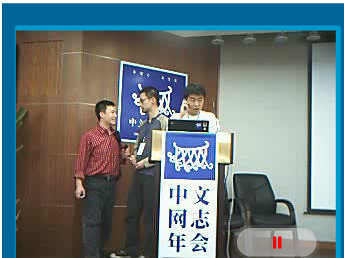
View the speakers at the conference over cam here:
http://www.seehaha.com/cbc.html

View the audience @ conference over cam here: http://www.seehaha.com/play.cfm?which=1940

Upload and tag your photos to flickr here http://www.flickr.com/photos/tags/cnbloggercon/clusters/

----------------------------

Tagged: cnbloggercon


About me

  • I'm ange Embuldeniya
  • From Canada
  • daily ramblings at infoSlut.org and varied HP dingalings :P
  • My profile

Links

  • Official CBC Site
  • Conference Schedule
  • Live Video Conference Broadcast
  • Live IRC Chat Session of Conference
  • Special Skype Room for Conference
  • CBC Conference on Google Groups
  • Global Voices
  • www.flickr.com
    This is a Flickr badge showing public photos from Flickr tagged with cnbloggercon. Make your own badge here.

RSS Feed ATOM Feed